Which Roofing Sheet Is Best for Factory Buildings in Bihar?
Selecting the right roofing sheet for a factory building in Bihar directly affects durability, maintenance costs, and indoor working conditions. With options like GI sheets, colour-coated sheets, and specialized industrial profiles, the decision should be based on span, load, corrosion exposure, and budget. Working with an experienced construction steel distributor in Bihar ensures you get the right grade, thickness, and profile for your specific industrial shed or manufacturing unit.
Key Factors to Consider Before Choosing Roofing Sheets
Factory roofs in Bihar face high temperatures, monsoon rains, dust, and in some areas, industrial pollution. The right roofing system must handle these stresses while keeping interiors cool and dry.
Important factors include:
-
Span and support structure: Longer spans between purlins may require thicker or profiled sheets for adequate strength.
-
Corrosion exposure: Units near chemical plants, brick kilns, or high-humidity zones need better corrosion protection.
-
Thermal performance: Factories with heat-sensitive processes or worker comfort concerns benefit from reflective or insulated roofing.
-
Maintenance access: Roofs that are difficult to access should use long-life, low-maintenance materials.
-
Budget and lifecycle cost: Initial cost matters, but replacement frequency and repair costs over 10–20 years are more important for factories.
Evaluating these factors helps narrow down the most suitable roofing sheet type for your manufacturing unit.
Common Types of Roofing Sheets for Factory Buildings
GI (Galvanized Iron) Roofing Sheets
GI sheets are steel sheets coated with a layer of zinc to protect against rust. They are widely used in industrial sheds, warehouses, and factory buildings due to their strength and affordability.
Advantages:
-
Good structural strength for industrial roofs
-
Cost-effective compared to many alternatives
-
Readily available in standard thicknesses and profiles
Limitations:
-
Over time, zinc coating can wear, especially in corrosive environments
-
Plain GI sheets offer limited aesthetic options
GI sheets work well for general-purpose factories where corrosion exposure is moderate and budget is a key consideration.
Colour-Coated (PPGI/PPGL) Roofing Sheets
Pre-painted galvanized iron (PPGI) or pre-painted galvalume (PPGL) sheets have a protective paint layer over the zinc or zinc-aluminium coating. These are popular for modern factory buildings that want better appearance and enhanced protection.
Advantages:
-
Better corrosion resistance than plain GI sheets
-
Wide choice of colours and finishes for branding and aesthetics
-
Improved reflectivity, which can reduce roof heat gain
Limitations:
-
Slightly higher cost than plain GI sheets
-
Paint layer can get damaged during handling if not installed carefully
Colour-coated sheets are ideal for factories that want a balance of durability, appearance, and thermal performance.
Galvalume and Aluminium-Zinc Coated Sheets
Galvalume sheets use an aluminium-zinc alloy coating instead of pure zinc, offering improved corrosion resistance and heat reflectivity. These are increasingly used in industrial and coastal applications.
Advantages:
-
Superior corrosion resistance, especially in humid or polluted air
-
Better heat reflection, helping reduce indoor temperatures
-
Longer service life compared to standard GI sheets
Limitations:
-
Higher initial cost
-
May not be necessary for low-corrosion, short-term structures
For long-life factory buildings in Bihar, especially in industrial belts, Galvalume-based roofing is often a smart investment.
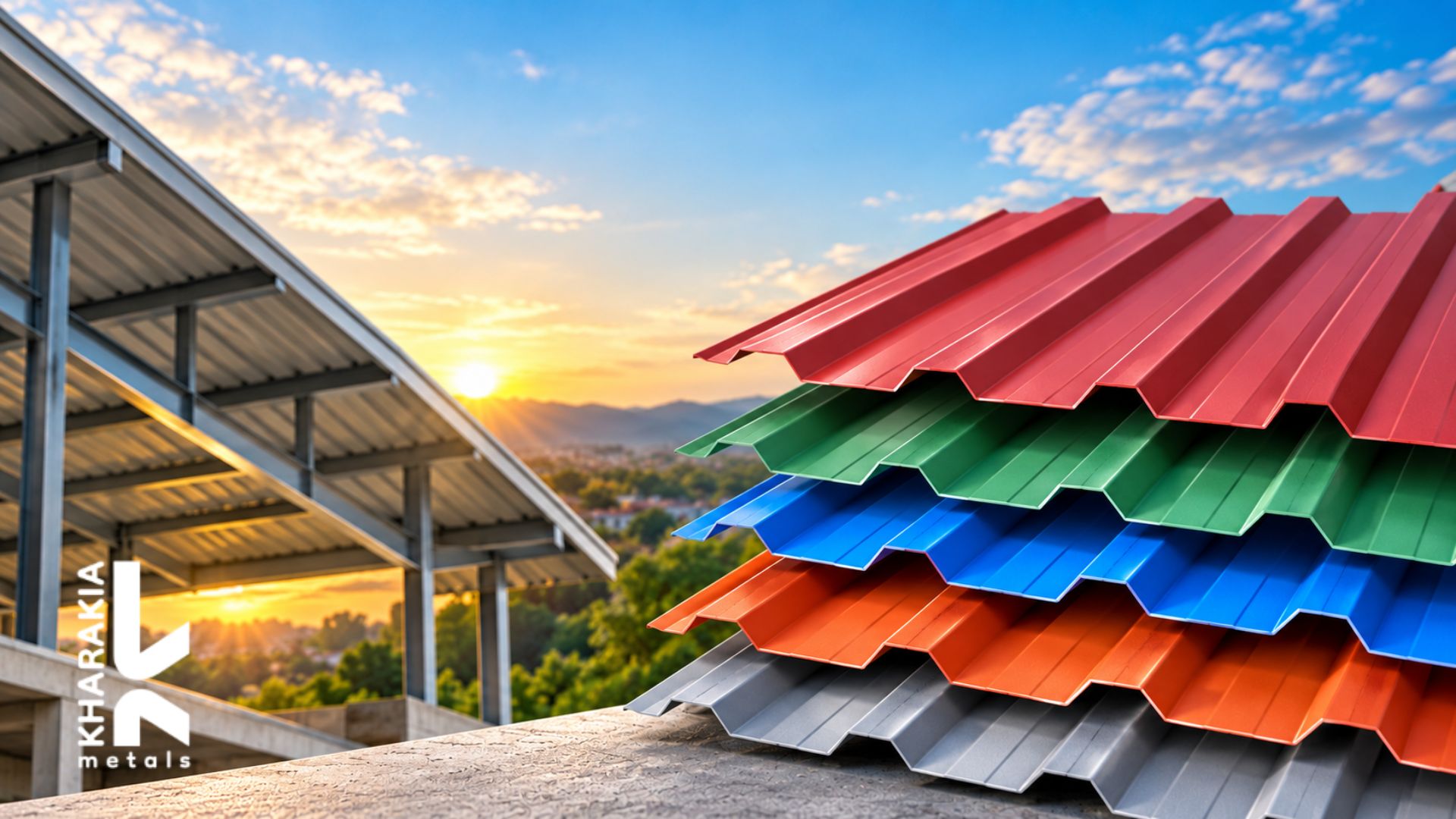
Profiled and Trapezoidal Sheets for Industrial Use
Beyond material, the profile (shape) of the sheet matters. Trapezoidal and other industrial profiles provide higher stiffness and better water drainage compared to simple corrugated sheets.
Advantages:
-
Higher load-bearing capacity for the same thickness
-
Better performance on low-slope roofs common in factories
-
Improved water runoff, reducing leakage risk
These profiles are commonly used with GI, PPGI, or Galvalume substrates in manufacturing units and warehouses.
Matching Roofing Sheets to Factory Requirements in Bihar
Bihar’s climate and industrial landscape create specific demands for factory roofing.
-
General manufacturing units: For typical factories with moderate exposure, GI or PPGI sheets in trapezoidal profile offer a good balance of cost and performance.
-
Chemical or high-pollution zones: Units near brick kilns, chemical plants, or heavy-traffic corridors benefit from Galvalume or high-quality colour-coated sheets with robust coating systems.
-
Large-span sheds: Warehouses and large factories with wide spans should use thicker sheets and industrial profiles to handle wind uplift and rain loads.
-
Worker comfort and heat-sensitive processes: Light-colour or reflective coatings help reduce heat absorption, improving indoor conditions and reducing cooling loads.
Choosing the right combination of substrate (GI, PPGI, Galvalume), coating, thickness, and profile is more important than simply picking the cheapest option.
Why Sourcing from the Right Distributor Matters
The performance of your factory roof depends not only on the type of sheet but also on quality, thickness accuracy, and proper handling. Reputable suppliers ensure:
-
Correct grade and thickness: Sheets that meet specified standards and are not under-gauged.
-
Genuine coatings: Proper zinc or aluminium-zinc coating levels as per requirement.
-
Handling and storage: Sheets stored and transported to minimize scratches, bends, and coating damage.
-
Technical support: Guidance on profile selection, fastener types, and installation best practices.
Kharakia Metals Pvt. Ltd. works with industrial clients across Bihar and Jharkhand to provide structural steel and roofing solutions suited to factory and warehouse applications. As a construction steel distributor in Bihar, the company focuses on reliable supply, quality assurance, and support for project-based requirements.
Understanding the Range of Roofing Options Available
Industrial roofing is not a one-size-fits-all decision. Different projects need different combinations of material, coating, thickness, and profile. A good supplier will offer a wide range of roofing sheets so you can choose based on your exact needs rather than being limited to a single option.
For factory buildings, this may include:
-
GI sheets in various thicknesses and corrugation patterns
-
Colour-coated sheets in multiple colours and coating systems
-
Galvalume-based sheets for enhanced corrosion and heat resistance
-
Trapezoidal and other industrial profiles for large-span structures
Having access to multiple options allows engineers and builders to optimize for cost, life, and performance instead of making compromises due to limited availability.
Practical Tips for Factory Roofing in Bihar
To get the best results from your factory roofing:
-
Use appropriate thickness: Do not under-specify thickness to save cost; thin sheets can sag, leak, or get damaged easily.
-
Choose the right profile: For low-slope industrial roofs, trapezoidal or similar profiles perform better than simple corrugated sheets.
-
Pay attention to fasteners and accessories: Use proper roofing screws, washers, and ridge caps to prevent leaks and wind damage.
-
Plan for thermal expansion: Allow for movement in long roof runs to avoid buckling or fastener failure.
-
Inspect regularly: Periodic checks for loose fasteners, coating damage, and ponding water can prevent major repairs later.
These practices, combined with the right sheet selection, help ensure a long-lasting, low-maintenance factory roof.
For manufacturing units in Bihar and Jharkhand, the right roofing sheet choice can significantly reduce maintenance, improve working conditions, and extend the life of the building. Kharakia Metals Pvt. Ltd. supports industrial clients with quality steel and roofing products, technical guidance, and reliable supply for projects of all sizes.
FAQs
Which roofing sheet is best for factory buildings in Bihar?
For most factory buildings in Bihar, colour-coated GI or Galvalume sheets in a trapezoidal industrial profile offer the best balance of strength, corrosion resistance, and heat reflection. The exact choice depends on span, exposure, and budget.
Are GI roofing sheets suitable for industrial sheds?
Yes, GI roofing sheets are widely used in industrial sheds and warehouses due to their strength and cost-effectiveness. They work well where corrosion exposure is moderate and proper thickness and profile are selected.
How do I decide between GI, colour-coated, and Galvalume sheets?
GI sheets are economical and strong, colour-coated sheets add better corrosion protection and aesthetics, and Galvalume sheets provide superior corrosion and heat resistance for long-life industrial roofs. The decision should be based on environment, design life, and budget.
What thickness of roofing sheet should be used for factory roofs?
Factory roofs typically use thicker sheets than residential roofs, often in the range of 0.40 mm to 0.60 mm or more depending on span and load. A structural engineer or experienced distributor can recommend the right thickness for your specific shed design.